News
Astrotourism and dark skies: when the countryside becomes cosmic luxury
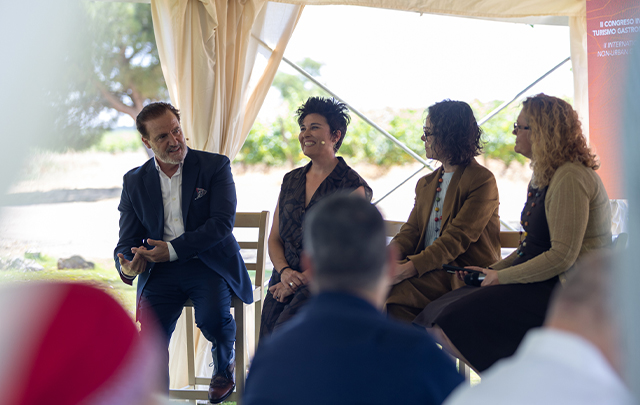
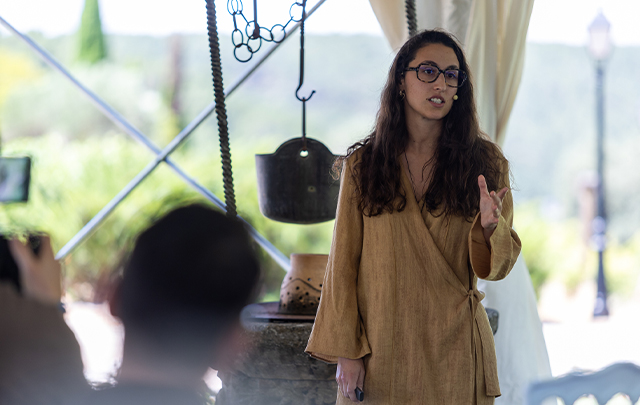
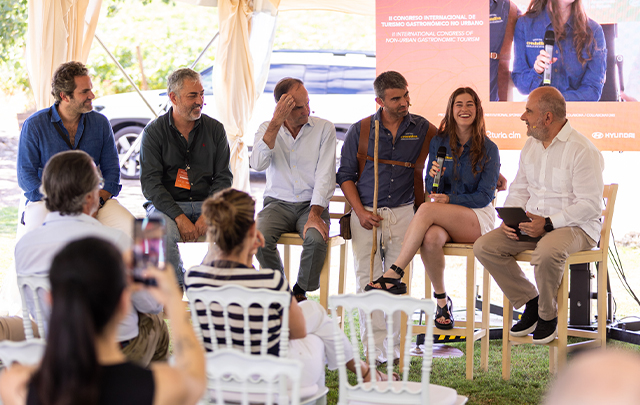
As part of the Discover-eat conference, an unconventional round-table discussion brought together gastronomy, wine tourism, sustainability and the cosmos. The panellists were Blanca Moreno (Molino de Alcuneza, a boutique hotel near Sigüenza), winemaker Juan Jesús Valdelana and Susana Malón, a specialist in light pollution and technical manager at Lumínica Ambiental. The result was a profound reflection on how the night sky – often overlooked – can become a driver of rural development, a high-value-added tourist resource and, at the same time, a natural and cultural heritage to be protected.
Blanca Moreno explained how a small boutique hotel, the Molino de Alcuneza, has turned the night sky into one of its main attractions for tourists. With 17 rooms and a Michelin-starred restaurant, it could have remained a classic gastronomic hotel in a rural setting. However, stargazing has gone from being a complementary activity to a key reason for booking. The starting point was almost paradoxical: they had a spectacular sky and ‘terrible’ lighting. The surroundings offered superb starry nights, but the building’s lighting — very powerful white halogen spotlights bathing the façades and shining light upwards — ruined much of that value. This contradiction led the hotel team to rethink their use of light.
Following a Starlight Foundation course to train guides, they decided to professionalise the initiative: they certified a Starlight guide and redesigned the lighting throughout the complex, with specialist technical advice. Today they have four telescopes of different types, including a digital one that accumulates light from celestial objects and allows them to show guests ‘deep sky’ images that would be impossible to see with the naked eye or using simple optics. Their audience is predominantly urban, consisting of people who have lost the ‘luxury’ of regularly seeing a starry sky or the Milky Way. Blanca quoted a comment from a guest who recalled seeing the Milky Way once in her village as an exceptional event; a stark contrast to how commonplace it is to see it in Alcuneza. This experience of reconnecting with the night sky has become a decisive factor for many guests when choosing a destination. The change was not merely technical, but first and foremost a shift in mindset: moving away from the idea that ‘bright lights’ equate to safety, wealth or prestige, and accepting that it is possible to live – and attract customers – with softer, warmer and more directional lighting that does not steal the limelight from the sky.
This is where Susana Malón’s perspective came into play, broadening the debate to encompass the quality of the sky, light pollution and its environmental, health and cultural implications. Malón reminded us that our relationship with the sky is profound: “we are stardust”. The elements that make us up originate from cosmic processes—such as supernova explosions—and yet, despite this, most of the population today lives with their backs turned on that origin, under skies that barely reveal a few stars.
The quality of the sky, he explained, is measured using very specific parameters, such as those employed by the Starlight certification: sky background brightness, which quantifies the extent to which the natural brightness of the night sky has been artificially increased, primarily due to outdoor lighting; sharpness or ‘seeing’, determined by atmospheric turbulence and which makes the difference between seeing a star as a point or as a smudge; atmospheric transparency, which is key for astronomical observations; and cloud cover and the percentage of suitable nights per year. These criteria are used to assess whether an area meets the conditions for astro-tourism in its various forms (tourist, amateur or professional). In Castilla-La Mancha, for example, each province already holds one or more certifications, either as a destination or as a Starlight Reserve. The problem, he pointed out, is that light pollution does not trigger instinctive warnings: it makes no sound, has no smell and is rarely perceived as a problem by the public, local authorities or even lighting technicians themselves. However, photographs taken from hundreds of kilometres away show how the light from large cities, such as Madrid, ‘pollutes’ the night sky over vast swathes of land. The spread of artificial lighting — rapid, widespread and often uncontrolled — has disrupted a balance that has existed for millions of years: the natural day-night cycle. For 4,000–6,000 million years, life on Earth has been regulated by this alternation. The reduction in dark nights, caused by excessive light, is disrupting the human circadian rhythm – a phenomenon associated with so-called chronodisruption, which is currently being studied by international groups of specialists – and is having severe impacts on biodiversity, particularly on species that depend on darkness to survive. It is estimated that around 65 per cent of natural species are nocturnal.
The contrast in light levels is stark: in a natural environment, under a full moon, illumination is around 0.3 lux (a unit of measure for illuminance). Any lit road or facility can raise this figure to 20, 25, 30 lux or more. It is this disproportion that triggers disruptions in the behaviour, mating or feeding patterns of many species. Moths and chiroptera (bats), for example, are fundamental links at the base of the food chain; their disorientation or decline due to excessive light has a cascading effect on ecosystems. Beyond ecology and health, Malón highlighted a silent yet profound loss: cultural disconnection. Today, around 85 per cent of the world’s population lives under light-polluted skies, without regular access to a visible Milky Way. This loss of a celestial reference point also entails the erosion of stories, traditions and ways of understanding our place in the world.
One of the key themes of Susana Malón’s presentation was the need to rethink lighting, drawing on technology but applying it correctly. The Starlight Foundation, with the backing of organisations such as UNESCO, the World Tourism Organisation and the International Commission on Illumination, promotes sky quality protocols and criteria for sustainable lighting. In parallel, the Institute for Energy Diversification and Saving (IDAE) and the Spanish Lighting Committee have drawn up technical guidelines for less polluting outdoor lighting.
Some of the key points highlighted were the importance of colour temperature — opting for warm lights (2200 K or less) significantly reduces scattering in the atmosphere and, therefore, light pollution — and an understanding of Rayleigh scattering: the physical phenomenon that explains why the sky is blue during the day also explains why light with a high blue component (cool white) scatters much more in the atmosphere, causing greater light pollution in the night sky.
LED technology has revolutionised the sector thanks to its efficiency and improved colour rendering. Even with very warm colour temperatures (2200–1800 K), colour rendering indices of around 70 can be achieved—far superior to those of older sodium lamps—without the need to resort to cool white lights. Malón emphasised that the technology is already available; the challenge lies in knowing how to use it and receiving the training to apply it correctly. In lighting design, factors such as uniformity and glare control are crucial: it is not a question of ‘flooding’ an area with light, but of illuminating it better and only to the extent strictly necessary, with luminaires properly directed downwards and without any light emission towards the sky. Furthermore, he pointed out that the human eye has an enormous capacity to adapt to darkness, a capacity we fail to make the most of because we are constantly dazzled by streetlights and spotlights. In astro-tourism, this is key: without allowing the eye to adapt, visitors’ expectations — fuelled by the colourful images from space telescopes — may clash with the reality of the sky as seen through the eyepiece, which is often much more subtle and faint. For this reason, informing and educating the client is an integral part of the experience.
Returning to the specific experience at the Molino de Alcuneza, Blanca Moreno explained that once the ‘mental revolution’ had taken place, the technical transformation followed. Following consultations on appropriate light levels (lux) and lighting configurations, they decided to replace the white halogen spotlights with warm LED lighting, redirect the light downwards—avoiding the façade being washed in light and light spilling into the sky—and reduce brightness levels, opting for a more subdued, gentle and welcoming ambience. The change not only improved the evening experience for customers but was also felt in the rural surroundings themselves. In her own small village — and in Alcuneza — the renewal of the streetlights has created more pleasant streets, free from glare, with warm light and, above all, the chance to see the stars again simply by stepping a few metres away from a lamppost. Blanca highlighted this as a form of heritage restoration: the night sky as something that also ‘belongs to us’. Her final appeal was as technical as it was emotional: to rethink the lighting of homes and villages, recognising that protecting darkness is compatible with liveability and, furthermore, enhances the environment and opens up new opportunities for astro-tourism.
Whilst Blanca provided the practical example and Malón the technical and scientific perspective, Juan Jesús Valdelana steered the conversation towards philosophical and almost existential ground, without losing sight of wine tourism and the winery experience. Raised in a small village in a house without electricity, his relationship with the night was initially marked by fear: he would run away at the first sign of darkness. His turning point came when he discovered, precisely, that idea so often repeated around the dinner table: we are stardust. From there, he recounted a personal journey of discovery that has led him to connect the story of wine and the land with the story of the cosmos.
Valdelana recalled some milestones in modern physics — from the view of the atom as an indivisible particle to the discovery of more fundamental particles, or the understanding of the Big Bang some 13.8 billion years ago — to emphasise just how difficult it is to intellectually grasp the universe. The more he has studied, he acknowledged, the more disoriented he feels and the more he longs for the simplicity of his former faith and spirituality. Far from being a hindrance, this conflict has become a powerful narrative thread in his wine tourism experiences. He also drew an eloquent comparison: in the entire universe, as far as we know, the only place where life exists is Earth. It is easier to imagine entire planets made of diamond than to find something as commonplace yet extraordinary as a tree. And yet, we value the diamond more than life itself. These kinds of reflections help him put things into context for those who visit his winery: the wine, the vineyard, the wood of the barrels, the tree from which that wood comes… all of this is the result of a unique cosmic and biological chain.
Valdelana concluded with an almost generational message: of all the living beings that have inhabited this Earth, we are the generation with the highest quality of life. Our parents, grandparents and great-grandparents lived worse lives. That realisation, he said, should prompt us to feel fortunate and to enjoy each day ‘to the full’, without squandering that opportunity. Towards the end of the panel discussion, Susana Malón also addressed one of the most deeply ingrained clichés: “more light equals greater safety”. She emphasised that lighting is just one factor amongst many in urban design and is not always decisive. She recalled Jane Jacobs’ observation from the 1960s: the most horrific crimes can take place in perfectly lit underground stations if there are no “watchful eyes” around. In other words, if the urban environment lacks a human presence, real visibility and the capacity to react, light alone guarantees nothing.
There are streets that will remain unsafe even if ‘50,000 million lux’ were added to them, because their design includes arcades, blind spots, signs that block the view, and a lack of windows or shops from which someone might hear a cry for help. In other cases, low but uniform lighting can offer a greater sense of security, precisely because it avoids deep shadows, glare and extreme contrasts. Their proposal is to redefine social demand: not to ask for ‘more light’, but for better light – adapted to the context, uniform and non-glare. This idea is compatible with the protection of the night sky and, furthermore, with its use for tourism.
As the discussion drew to a close, the moderator asked the speakers to summarise in a single idea what is gained by protecting dark skies. The answers, far from being technical, revealed the general tone of the conversation. For Juan Jesús Valdelana, it is about living and loving in moderation, yet without reservation when it comes to giving oneself fully: a call to make the most of this privileged life in a unique corner of the universe. Susana Malón defined the protection of the night sky as protecting ‘our home’. She evoked the image of the Earth as seen from afar, a tiny blue speck suspended in the midst of nowhere. Taking a step back — looking up towards the cosmos — is, for her, a way of re-evaluating the place we inhabit and understanding its fragility. Blanca Moreno spoke of heritage and roots. Defending the night sky also means defending a community culture: stepping out of one’s front door with a chair, chatting and gazing at the stars. An intangible value that, if we obscure it with light, is lost.
Amidst haute cuisine, wine, lighting technology and cosmological reflections, the astro-tourism round table conveyed a clear message: the night sky is an economic resource, yes, but above all it is a shared heritage that brings together health, biodiversity, culture and a sense of belonging. In a context where 85 per cent of the population lives under light-polluted skies, small villages and rural areas that choose to embrace darkness in the right way can become true sanctuaries for the future.
Related news
News
Discover-Eat charts a course towards better gastronomic towns and regions with a bright future
News
Gastronomic tourism as a lifeline for the countryside
News
Wine tourism is being reinvented in Castilla-La Mancha: from the cult of wine to enjoyment without snobbery
News

When Spain didn’t know how to market its cuisine or its stars
News

Huesca: a hub for haute cuisine and radical hospitality
News
Bread, that great unknown
News
Rural tourism is also looking to the stars for allies
News
Rural tourism and artisan cheeses: how the Spanish countryside is reinventing itself
News
The winegrower who brought the stars together with the glass: Juan Jesús Valdelana’s wine tourism revolution
News