News
Rural tourism is also looking to the stars for allies
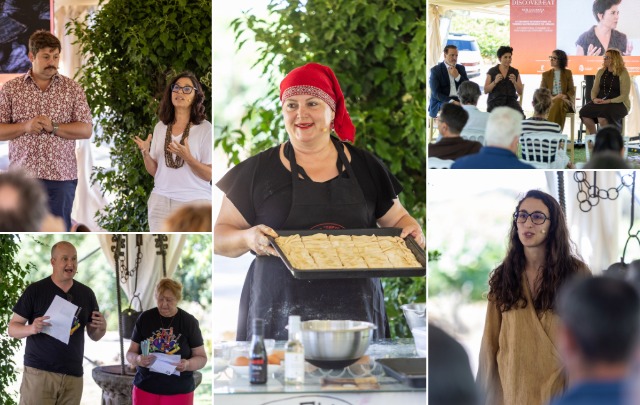
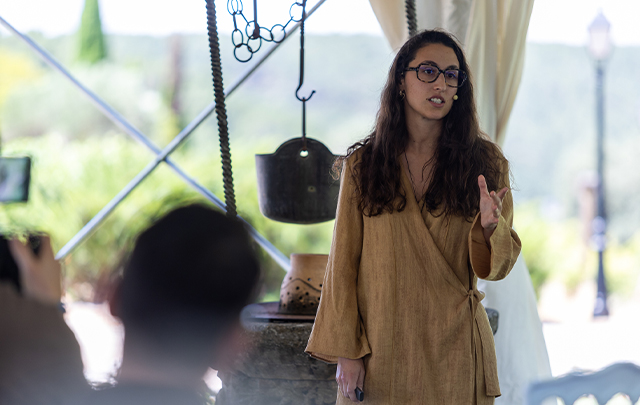
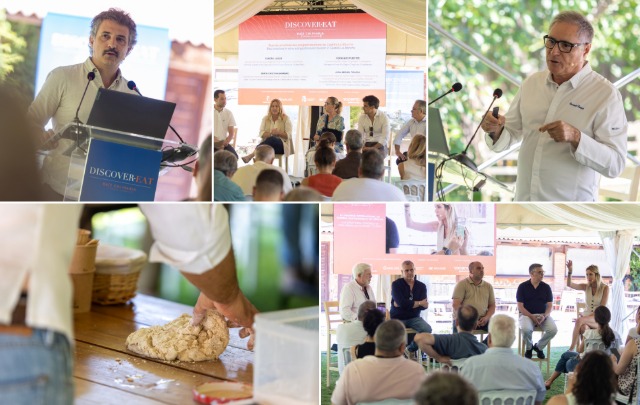
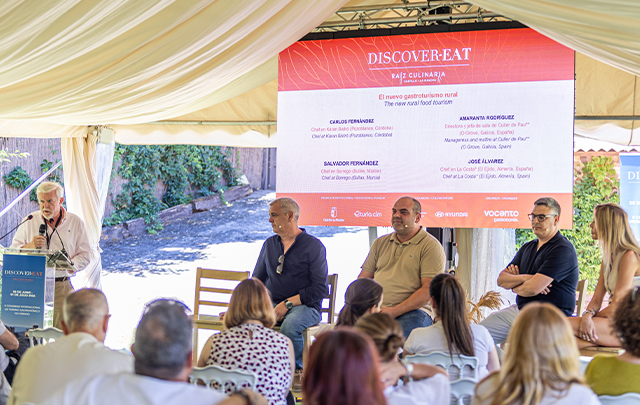
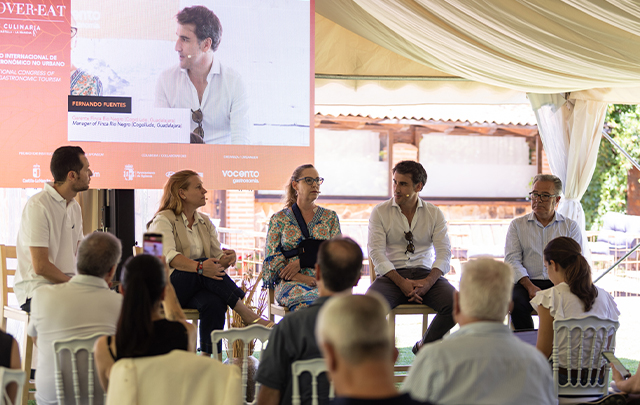
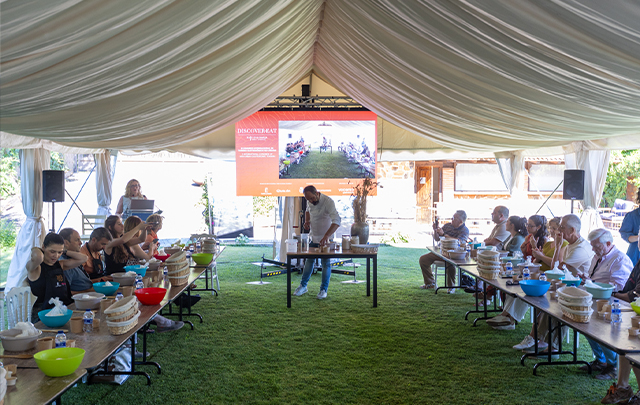
Discover-Eat, the International Congress on Non-Urban Gastronomic Tourism, held its second day’s proceedings in Cogolludo (Guadalajara), specifically at the Bodegas Río Negro, where delegates had the opportunity to continue learning about the potential of gastronomy as a driving force for tourism and the rural economy.
Organised by Vocento Gastronomía and supported by the Government of Castilla-La Mancha, this international forum has continued to showcase success stories from rural destinations that have embraced their gastronomic culture as a strategy for differentiation. A prime example of this was the experience of Natasha Nedanoska, a chef, farmer and owner of the Pirustija Nedanoski Agritourism Centre (Ramne, North Macedonia). This former language teacher-turned-rural tourism entrepreneur offers an immersive culinary experience on her farm that showcases Balkan hospitality. “We do nothing more than what our grandparents used to do when they had guests: we welcome them, feed them and make them feel like one of our own,” explains Natasha about her project. As well as having the chance to sample Macedonian produce and cuisine, at Pirustija Nedanoski visitors can take part in “cooking classes, pick vegetables from the garden, make cheese and collect eggs from the henhouse” on a farm whose philosophy is self-sufficiency. In short, it’s a holistic experience that ties in with the new wave of tourism seeking a genuine connection with the region being visited – a bond that gastronomy helps to foster.
And from an agritourism farm in Macedonia, Discover-Eat has travelled to the tavernas of the Alto Tâmega region in Portugal. Led by chef Vítor Adão (Plano, Lisbon) and rural development and communications expert Teresa Vivas, attendees at this international forum were able to discover the value of the traditional taverns in this part of Portugal’s Trás-os-Montes region as part of the country’s gastronomic and cultural heritage. The ‘Tabernas do Alto Tâmega’ project, launched in 2004, is a network of rustic, family-run restaurants serving 100 per cent local and seasonal produce. The network was created with the aim of “revitalising these buildings that were falling into disrepair, as we feared we would lose an incredible heritage”, explained Teresa Vivas. The restoration of these spaces, as well as supporting the production of native breeds (such as the Bísaro pig or the Trasmontana mountain goat), has also “encouraged the arrival of a new generation of restaurateurs and chefs who have come to understand the region very well and work in collaboration with producers”, noted Víctor. This project demonstrates the power of unity and collaboration in rural areas and illustrates that a future for these regions is possible provided there are interesting projects. “Thanks to this project, the future of gastronomy and local production in this area is now assured,” said Vivas with relief.
Marta Iglesias, content creator and director of the ‘Un lugar en la Ribera’ project (La Aguilera, Burgos), which offers wine tourism and gastronomic experiences through group meals, emphasised the idea of unity. With the aim of “creating synergies between local talent and ‘forcing’ us to come together”, this project enables visitors to discover local produce and share it with the chefs and winegrowers of the Ribera themselves. “The idea is that those coming from outside can experience the Ribera with us,” explained Marta, who also revealed that the initiative’s sole means of communication is via social media. At the same time, residents of the Ribera come to realise, through the eyes of the tourist, “that what for us is everyday life is something special, unique, that sets us apart,” revealed Iglesias.
What makes us choose a destination?
As highlighted on the second day of Discover-Eat, sometimes it is a product rather than an experience that acts as the ‘lure’ to attract visitors to an area. This is the case, for example, with whisky on Islay (Ìle in Gaelic), a small island in the west of Scotland home to many whisky distilleries. With Florence Grey and Ben Shakespeare, respectively chair and member of the Organising Committee of the Fèis Ìle festival, conference attendees were able to learn first-hand how hosting a whisky festival has an impact on the island beyond the distilleries. “Whisky is the magnet that draws visitors, who, once on the island, have the chance to discover everything we have to offer,” explained Ben Shakespeare. In fact, as Florence Grey pointed out, the original reason for creating the festival 40 years ago was to “show visitors our island’s culture: our beaches, our seafood… It was the distilleries that saw the festival as an opportunity to promote their product”. This partnership has proved fruitful, with the festival now firmly established – “we’re already fully booked for next year” – and generating an economic impact across various sectors of the island, as the festival not only offers whisky-related activities but also features gastronomic and cultural events… “The common thread running through the festival is whisky, but in reality it’s about us, our community, and the culture of the people of the island of Ìle,” summarised Grey.
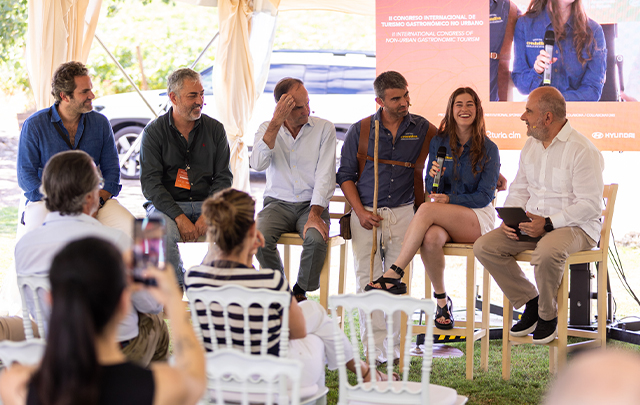
Another product gaining prominence as a major attraction, due to its status as an artisanal product with strong local ties, is cheese. During a round-table discussion with producers from various parts of Spain at Discover-Eat, there was also a debate on the need to revive traditional grazing techniques that enable the production of high-quality products which, in turn, become tourist attractions in their own right. Moderated by the conference director, Benjamín Lana, the following speakers shared their experiences: Jesús ‘Suso’ Mazaira, partner and co-founder of Airas Moniz (Chantada, Lugo); Juan Ocaña Mateo, a livestock farmer in Crestellina (Casares, Málaga, Spain); José María Alonso Ruiz, president of QueRed and owner of Quesería Quesoba (Sangas, Cantabria); and Luis de la Vega Yrisarry, sales director at Quesería Finca Valdivieso (Alcázar de San Juan, Ciudad Real). The goat farmer from Málaga called for greater consumer awareness: “It is important to explain the product to consumers so that they appreciate it, as well as the work done in the countryside”; otherwise, these trades and artisan products are destined to disappear. For this reason, many of them have chosen to open the doors of their homes to customers. They all agreed that we are now experiencing a change – “we are in a very sweet moment”, said Suso Mazaira – and we are coming to realise that “we are all responsible for preserving our heritage, locals and visitors alike, producers and consumers”.
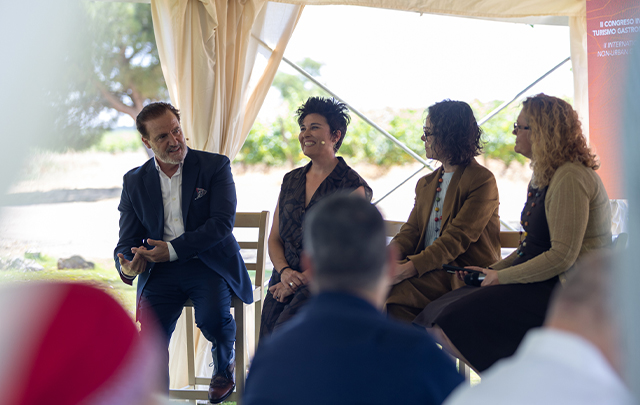
Finally, Discover-Eat also sought to highlight the need to innovate and expand activities, even in businesses that are already up and running, in order to maintain interest in rural areas as tourist destinations. During a round-table discussion featuring Blanca Moreno, co-owner and manager of the Molino de Alcuneza hotel (Alcuneza, Guadalajara); Juan Jesús Valdelana, CEO of Bodegas Valdelana (Elciego, Álava); and Susana Malón, a physicist specialising in light pollution and night-sky quality; it became clear that stargazing is a new attraction for tourism in non-urban areas. “Our sky is also part of our heritage,” stated Blanca Moreno. The co-owner of the Molino de Alcuneza explained how this boutique hotel has turned the night sky into one of its main assets, as stargazing “has gone from being a complementary activity to a key reason for booking”. By adapting the lighting – “softer, warmer, directed downwards” – a more relaxing effect is achieved, fostering a sense of connection with the surroundings, she explained. In this regard, the astrophysicist pointed out that light pollution, “although it does not trigger instinctive warnings (it makes no sound, has no smell), affects the human circadian rhythm and the life cycles of other living beings”. For its part, Bodegas Valdelana has embraced “stellar pairings”, which are organised in July and August and allow visitors to “discover the history of the stars by weaving a narrative with a glass of wine and a song”. Thus, through stargazing or evening pairings, rural tourism is also seeking allies amongst the stars.
Related news
News
Discover-Eat charts a course towards better gastronomic towns and regions with a bright future
News
Gastronomic tourism as a lifeline for the countryside
News
Wine tourism is being reinvented in Castilla-La Mancha: from the cult of wine to enjoyment without snobbery
News

When Spain didn’t know how to market its cuisine or its stars
News

Huesca: a hub for haute cuisine and radical hospitality
News
Bread, that great unknown
News
Rural tourism and artisan cheeses: how the Spanish countryside is reinventing itself
News
Astrotourism and dark skies: when the countryside becomes cosmic luxury
News

The winegrower who brought the stars together with the glass: Juan Jesús Valdelana’s wine tourism revolution
News