News
Rural tourism and artisan cheeses: how the Spanish countryside is reinventing itself
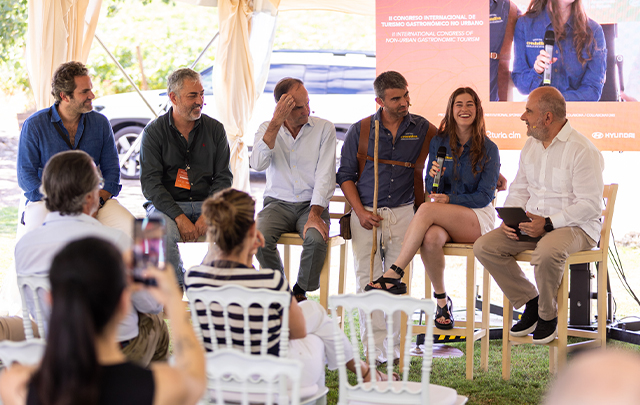
At a round-table discussion featuring four leading figures from the artisan cheese sector — Jesús “Suso” Mazaira (Airas Moniz, Chantada, Lugo), Juan Ocaña Mateo (Crestellina, Casares, Málaga), José María Alonso Ruiz (Quesoba, Cantabria) and Luis de la Vega Yrisarry (Finca Valdivieso, Alcázar de San Juan, Ciudad Real)—provided a detailed analysis of how cheese has become a driving force for rural development. Their projects, spread across half of Spain, share the same assessment: without grazing, without breeds adapted to the local terrain and without a new generation taking over livestock farming, there can be no good cheeses, no landscape and no sustainable rural tourism.
They all emphasised the importance of controlling what the livestock eats to ensure milk of high microbiological quality and with its own distinct character. Valdivieso, in La Mancha, opts for rotational grazing for its sheep; Airas Moniz works with Jersey cows using regenerative grazing; Quesoba is fighting the tide in a dairy-focused Cantabria where most farms are geared towards milk ‘for cartons’, which is poor in the beneficial microbiology needed for cheese; and in Crestellina, defying all economic logic, the Payoya goat is maintained – a native breed that is less productive but closely linked to the Mediterranean scrubland. The message is the same: fewer litres, higher quality.
This commitment translates into very clear technical decisions: the use of raw milk, a rejection of intensive farming models, the restoration of pastures, and the preservation of natural rinds covered in their own moulds, which imbue the cheeses with aromas of caves, damp forests or terroir. “Each batch is like a grape harvest,” noted Alonso Ruiz, arguing that seasonal variation and differences between batches are not a flaw, but a sign of authenticity in the face of industrial uniformity.
Beyond production, the four speakers agreed on the need to open the doors of cheese dairies to the public. Airas Moniz welcomes visitors all year round and requires distributors and chefs to familiarise themselves with the reality of the farm before working with them. In Valdivieso, around 60 per cent of the cheese is sold locally, within the region itself, with visits to the livestock farm and the cheese dairy. Crestellina has developed workshops to showcase the craft of goat herding, introduce visitors to the young goats and round off the experience with tastings and pairings; the next step will be a shop-cum-bar where their cheeses can be paired with products from other small local producers.
In Cantabria, Quesoba has gone a step further, setting up an artisan cheese dairy in an almost deserted mountain village, complete with a tourist hostel and spaces for meals and tastings. Alonso acknowledges that he was inspired by the wineries of La Rioja: a tour, an explanation, traditional food and direct sales as the only way to make small-scale production viable in a context where traditional distribution channels no longer work for artisans.
The speakers also highlighted the role of the consumer. For Juan Ocaña, one of the main factors behind the exodus from the countryside is the consumer who, without a second thought, chooses cheap, imported products over those from a local neighbour who keeps the hills clean and looks after native breeds. The advocacy for the ‘responsible consumer’ goes hand in hand with the call to restore dignity to the trade: we must stop viewing the goatherd or shepherd as a second-class figure compared to jobs in the tourism sector.
There was no shortage of criticism of bureaucracy and the rural divide. Suso Mazaira recounted how a cutting-edge cheese dairy can spend years travelling down to the village simply to send electronic invoices due to a lack of fibre-optic connectivity, whilst transport companies refuse to make the journey up to the farm. Despite this, projects such as his demonstrate that it is possible to create stable employment, offer full working days, weekends off and a good quality of life in rural areas – something unthinkable just a few decades ago.
On a strictly gastronomic note, the table also served as a showcase for cheeses and butters that are setting the trend on the Spanish scene: a Manchego with a fully edible rind covered in natural moulds; a Galician blue cheese, ‘Sabel’, which is exported and has become an icon; a cult artisan butter tailor-made for haute cuisine; and a young Payoya goat’s cheese, paired with pepper jams from the valley itself. There was even talk of pairing blue cheeses with whisky, championing lesser-known combinations.
The underlying message was a shared one: wine and cheese are more than just food; they embody the landscape, the animals, the climate and the human touch, all concentrated in a single product. For rural tourism to have a future, they concluded, we need honest, viable projects deeply rooted in the local area – projects capable of demonstrating that it is possible to live well in villages by producing little, but producing it very well, and sharing this story face-to-face with those who sit down at the table.
Related news
News
Discover-Eat charts a course towards better gastronomic towns and regions with a bright future
News
Gastronomic tourism as a lifeline for the countryside
News
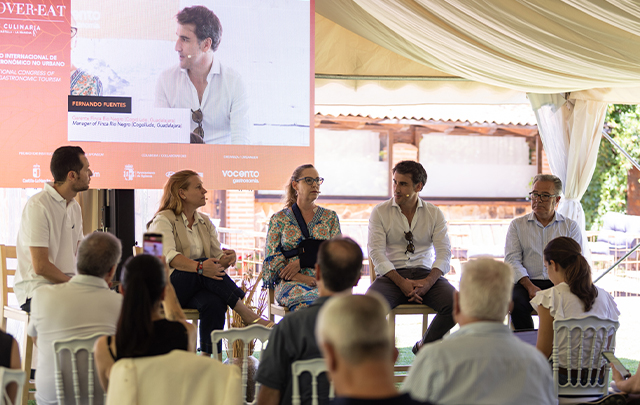
Wine tourism is being reinvented in Castilla-La Mancha: from the cult of wine to enjoyment without snobbery
News

When Spain didn’t know how to market its cuisine or its stars
News

Huesca: a hub for haute cuisine and radical hospitality
News
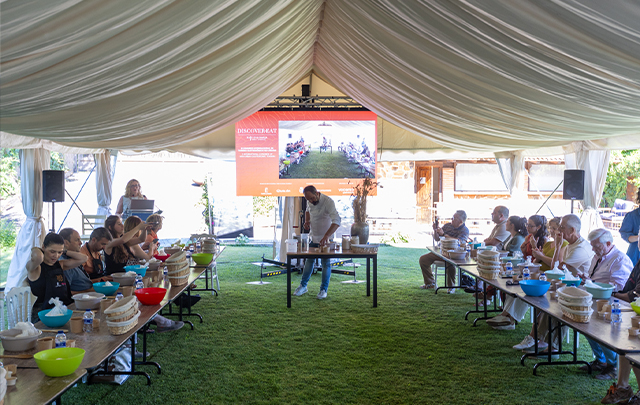
Bread, that great unknown
News
Rural tourism is also looking to the stars for allies
News
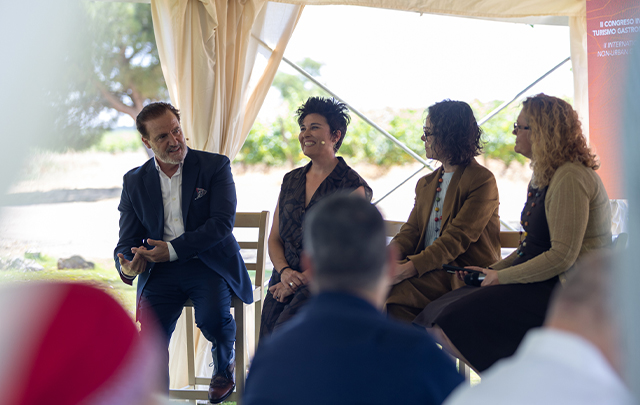
Astrotourism and dark skies: when the countryside becomes cosmic luxury
News

The winegrower who brought the stars together with the glass: Juan Jesús Valdelana’s wine tourism revolution
News